
Below is a lesson that gives an overview of different kinds of money. Consider reading it with your child and using the discussion questions to generate conversations about money.
What is Money?
Imagine a world where you couldn’t just buy your favorite game or snack with coins or bills. Sounds strange, right? Well, a long time ago, people used something called the bartering system. Think about a time you’ve swapped a video game for a book with your friend. That’s bartering in action! It was all about trading goods and services directly. For example, a farmer and shoemaker might’ve traded eggs for shoes. But as societies grew, people needed a better way to pay. That’s when modern money came in.
Let’s explore some types of money we use today.
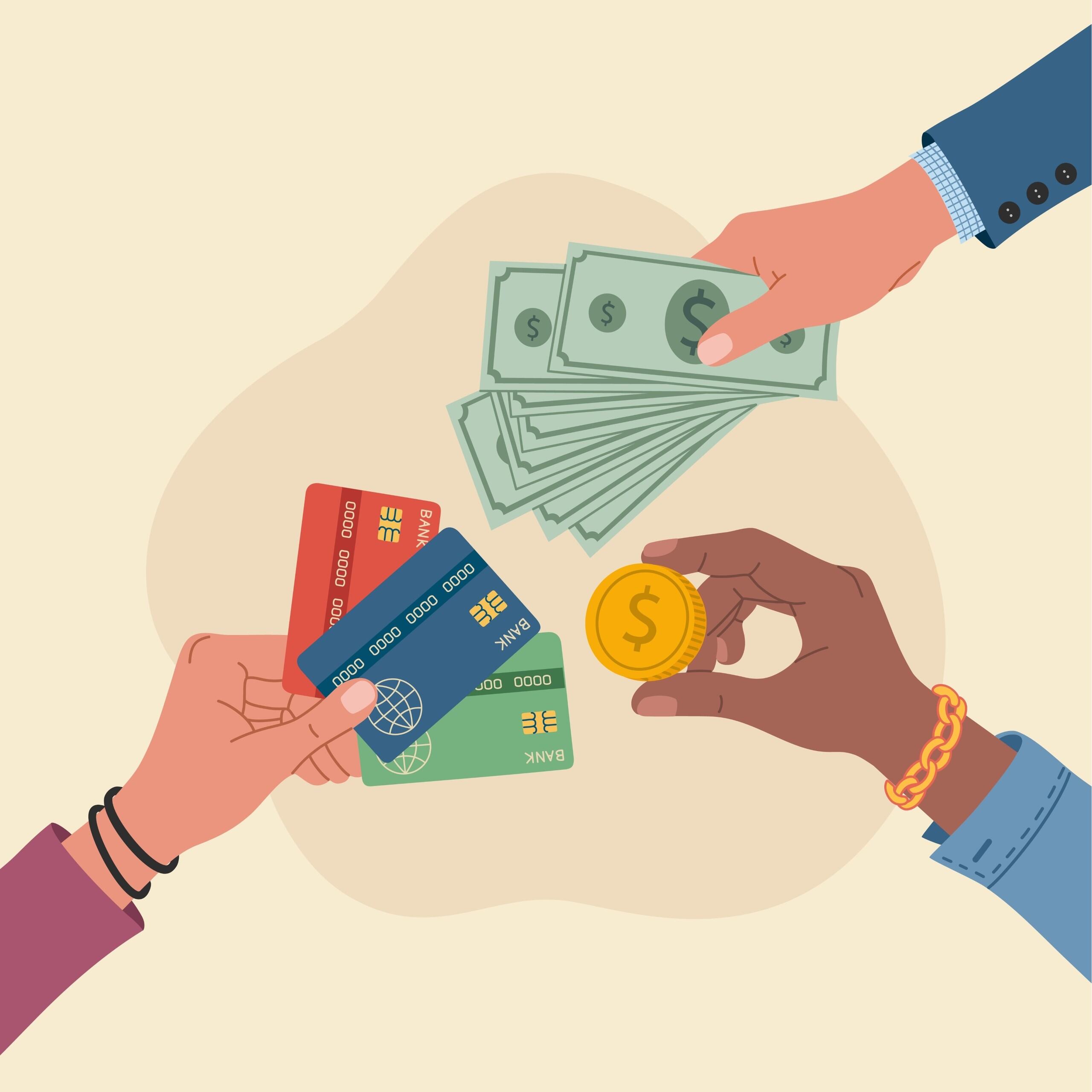
- There’s cash, like bills and coins. You can see and feel it, and it’s easy to understand what you’re spending. But it can easily get lost or stolen. It’s also harder to keep track of your spending without a record.
- Ever been at the checkout when the cashier asks, “Credit or debit?” Credit and debit cards are also kinds of money.
- With a credit card, you’re borrowing money from a bank. You promise to pay it back later, but here’s the catch: If you don’t pay off your entire bill each month, you’ll owe interest. Interest is like an extra fee you pay when you borrow money and don’t pay it back right away. Imagine you borrow $10 from a friend and promise to give it back in a week. If you take longer, your friend might ask for an extra dollar as a thank you for waiting. That extra dollar is similar to interest. On the bright side, using a credit card responsibly can boost your credit score, which is super handy when you’re eyeing big purchases like a car.
- A credit score is a number that shows how good you are at borrowing money and paying it back on time. It’s like a grade for how responsible you are with money. A high credit score can help you get a loan or buy things like a car or a house more easily.
- Debit cards are linked directly to your bank account. They spend your own money, so they are great for avoiding overspending and debt. The downside? Debit cards don’t help build your credit score.
- With a credit card, you’re borrowing money from a bank. You promise to pay it back later, but here’s the catch: If you don’t pay off your entire bill each month, you’ll owe interest. Interest is like an extra fee you pay when you borrow money and don’t pay it back right away. Imagine you borrow $10 from a friend and promise to give it back in a week. If you take longer, your friend might ask for an extra dollar as a thank you for waiting. That extra dollar is similar to interest. On the bright side, using a credit card responsibly can boost your credit score, which is super handy when you’re eyeing big purchases like a car.
- Have you noticed people tapping their phones to pay for things? They’re using apps connected to their accounts. Digital payments are fast, convenient, and often safer than carrying cash. But remember, whether it’s digital or physical, money has limits—once you spend it, it’s gone.
Family Discussion Questions:
- What is bartering and can you think of a time you traded something with a friend?
- Why do you think people started using money instead of bartering?
- Pretend you are going on a fun shopping trip. You can spend up to $100. What will you buy, and which kind of money will you use to pay? Why?
 English
  Spanish
  Vietnamese
  Arabic
  French
  Telugu
  Russian
  Chinese
  Portuguese
  Hindi
Hindi  Urdu
Urdu  Nepali
  Uzbek
Uzbek